Kamis, 29 November 2012

[A950.Ebook] PDF Download Salvador Dali: Life and Work (Art in Focus), by Frank Weyers

PDF Download Salvador Dali: Life and Work (Art in Focus), by Frank Weyers

Interested? Certainly, this is why, we expect you to click the web link web page to see, and afterwards you could delight in guide Salvador Dali: Life And Work (Art In Focus), By Frank Weyers downloaded till completed. You could conserve the soft data of this Salvador Dali: Life And Work (Art In Focus), By Frank Weyers in your gadget. Obviously, you will bring the gizmo almost everywhere, won't you? This is why, every time you have extra time, every single time you can delight in reading by soft duplicate book Salvador Dali: Life And Work (Art In Focus), By Frank Weyers

Salvador Dali: Life and Work (Art in Focus), by Frank Weyers

Salvador Dali: Life and Work (Art in Focus), by Frank Weyers


Salvador Dali: Life and Work (Art in Focus), by Frank Weyers

PDF Download Salvador Dali: Life and Work (Art in Focus), by Frank Weyers

Salvador Dali: Life And Work (Art In Focus), By Frank Weyers. One day, you will find a new adventure and knowledge by investing more cash. Yet when? Do you assume that you need to get those all needs when having significantly cash? Why don't you try to obtain something straightforward initially? That's something that will lead you to recognize even more regarding the world, journey, some locations, history, home entertainment, and also a lot more? It is your personal time to continue reading habit. One of the e-books you can appreciate now is Salvador Dali: Life And Work (Art In Focus), By Frank Weyers below.

When obtaining this e-book Salvador Dali: Life And Work (Art In Focus), By Frank Weyers as recommendation to review, you can acquire not just motivation yet additionally brand-new expertise and also sessions. It has greater than usual advantages to take. What kind of book that you review it will be useful for you? So, why ought to obtain this publication entitled Salvador Dali: Life And Work (Art In Focus), By Frank Weyers in this post? As in link download, you can get the book Salvador Dali: Life And Work (Art In Focus), By Frank Weyers by on-line.

When obtaining guide Salvador Dali: Life And Work (Art In Focus), By Frank Weyers by on-line, you can review them wherever you are. Yeah, also you are in the train, bus, waiting listing, or various other areas, online book Salvador Dali: Life And Work (Art In Focus), By Frank Weyers could be your excellent buddy. Whenever is a great time to review. It will improve your understanding, enjoyable, entertaining, session, and also encounter without investing even more money. This is why on the internet book Salvador Dali: Life And Work (Art In Focus), By Frank Weyers becomes most really wanted.

Be the first that are reviewing this Salvador Dali: Life And Work (Art In Focus), By Frank Weyers Based on some reasons, reading this publication will certainly supply even more advantages. Even you have to review it step by action, page by page, you could complete it whenever as well as any place you have time. Once a lot more, this on-line e-book Salvador Dali: Life And Work (Art In Focus), By Frank Weyers will provide you simple of reviewing time and task. It additionally supplies the experience that is cost effective to reach as well as get significantly for much better life.

Salvador Dali: Life and Work (Art in Focus), by Frank Weyers

This is one of the "Great Modern Masters" series on 20th-century artists. This book covers the work of Salvador Dali (1904-1989). It presents 74 reproductions of works from his career, beginning with canvases rarely seen - his earliest paintings created while still in his teens. Although Dali worked in many styles - realist, abstract, Cubist - he is most often thought of as a leader in the Surrealist movement of the 1920 and 30s. Indeed, the words Surrealism and Dali are almost synonymous, despite his stormy split from the movement to launch his own style, portraying an imagined world of symbols projecting visions steeped in sexual and religious images. The book offers commentaries on each colour plate, providing insights into Dali's output of phantasmagoric paintings, drawings, and graphics. Dali also created theatre, opera, and ballet sets, was a pioneer in Surrealist film-making, illustrated numerous books, wrote an autobiography and a novel, and designed fashion and jewellry. Two examples of the latter are included here.

  • Sales Rank: #5318289 in Books
  • Brand: Brand: Konemann
  • Published on: 2000-03
  • Original language: English
  • Number of items: 1
  • Dimensions: .36" h x 6.53" w x 7.90" l,
  • Binding: Paperback
  • 96 pages
Features
  • Used Book in Good Condition

Language Notes
Text: French

From the Back Cover
Turning away from the powerful Cubist influence of fellow painter Pablo Picasso, Salvador Dal� incorporated the hallucinatory qualities of Surrealism in his paintings and went on to become one of the 20th century's most famous artists.
The melting clocks in his Persistence of Memory are among the most recognizable images in modern art. That well-known work appears here in sticker format along with 15 other scrupulously reproduced works by the Spanish artist, among them The Visage of War, Figure at a Window, The Enigma of Desire, and Surrealist Poster.
Original Dover (2000) publication.

About the Author
Dawn Ades is professor of art history and theory at the University of Essex. Among the exhibitions she has organized are Art in Latin America (1989) and Salvador Dal�-The Early Years (1994). Her publications include Dada and Surrealism Reviewed, Surrealist Art, and Photomontage: Marcel Duchamp and Dal�.

Most helpful customer reviews

1 of 2 people found the following review helpful.
DALI. Edited by Max Gerard. Translated by Eleanor R. Morse.
By Joseph Remy
I used to have this book, and my ex-wife took it. I was delighted to find another copy.

6 of 6 people found the following review helpful.
excellent service and an exciting book!
By rufus
I saw a copy of this book at a "Book Swap"and picked it up, expecting to see all the familiar works by Dali. What an amazing surprise; this was the first time I had ever seen most of the images portrayed. Someone else had actually chosen this book so I dashed home and found the same edition on Amazon! I sent in my order immediately and it was quickly delivered. This is one of the most unusual art books in my collection.

85 of 89 people found the following review helpful.
Riding Dali's Roller-Coaster
By Ralph J. Bellantoni
As a college art major I developed a distaste for Dali and his art, even referring to him as a "pimp" in an essay. I was turned off by his commercialism and his overly-polished style. But over the years my opinion began to shift, and the major retrospective at the Philadelphia Museum of Art has completely renovated my appreciation for the man and his art.

This huge and handsome tome is the catalogue for the Philly retrospective, and includes hundreds of color images along with insights into the thought behind the imagery. The book takes you through his youthful experiments in post-impressionism and cubism (there are a few works you'd swear were by Picasso!), into his affiliation with Surrealism, his development of his personal "paranoiac-critical" method, and his later interests in physics and conversion to Catholicism. The middle section of the book and exhibit includes hundreds of his best-known and most widely-admired paintings, but surprises abound in the early and later sections, with works most people never knew he created.

What struck me most in the show and the book was how thoroughly dedicated Dali was to his art, and how intellectually involved his work was. His draughtsmanship was also so acute as to defy belief. I realize now that I was sold so completely on his posture as an eccentric personality, that I lost sight of the power of his art. But this show and book reveal how truly special and significant Dali was as an artist, art theorist, and explorer of the hinterlands of the mind and soul.

See all 36 customer reviews...

Salvador Dali: Life and Work (Art in Focus), by Frank Weyers PDF
Salvador Dali: Life and Work (Art in Focus), by Frank Weyers EPub
Salvador Dali: Life and Work (Art in Focus), by Frank Weyers Doc
Salvador Dali: Life and Work (Art in Focus), by Frank Weyers iBooks
Salvador Dali: Life and Work (Art in Focus), by Frank Weyers rtf
Salvador Dali: Life and Work (Art in Focus), by Frank Weyers Mobipocket
Salvador Dali: Life and Work (Art in Focus), by Frank Weyers Kindle

Salvador Dali: Life and Work (Art in Focus), by Frank Weyers PDF

Salvador Dali: Life and Work (Art in Focus), by Frank Weyers PDF

Salvador Dali: Life and Work (Art in Focus), by Frank Weyers PDF

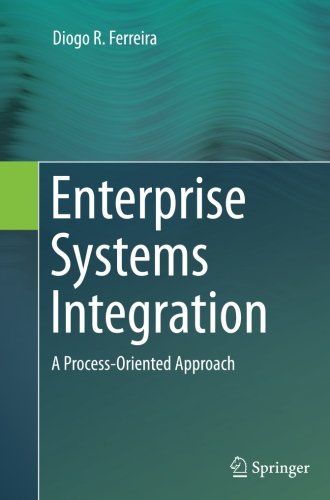
[L590.Ebook] Download Ebook Enterprise Systems Integration: A Process-Oriented Approach, by Diogo R. Ferreira

Download Ebook Enterprise Systems Integration: A Process-Oriented Approach, by Diogo R. Ferreira

Based on the Enterprise Systems Integration: A Process-Oriented Approach, By Diogo R. Ferreira specifics that we offer, you could not be so baffled to be right here and to be participant. Obtain now the soft documents of this book Enterprise Systems Integration: A Process-Oriented Approach, By Diogo R. Ferreira as well as save it to be all yours. You conserving can lead you to stimulate the ease of you in reading this book Enterprise Systems Integration: A Process-Oriented Approach, By Diogo R. Ferreira Even this is types of soft file. You can actually make better chance to get this Enterprise Systems Integration: A Process-Oriented Approach, By Diogo R. Ferreira as the suggested book to read.

Enterprise Systems Integration: A Process-Oriented Approach, by Diogo R. Ferreira

Enterprise Systems Integration: A Process-Oriented Approach, by Diogo R. Ferreira


Enterprise Systems Integration: A Process-Oriented Approach, by Diogo R. Ferreira

Download Ebook Enterprise Systems Integration: A Process-Oriented Approach, by Diogo R. Ferreira

Book Enterprise Systems Integration: A Process-Oriented Approach, By Diogo R. Ferreira is one of the precious well worth that will make you always rich. It will certainly not imply as abundant as the cash provide you. When some people have lack to face the life, individuals with several e-books sometimes will certainly be wiser in doing the life. Why ought to be book Enterprise Systems Integration: A Process-Oriented Approach, By Diogo R. Ferreira It is in fact not meant that book Enterprise Systems Integration: A Process-Oriented Approach, By Diogo R. Ferreira will provide you power to reach every little thing. Guide is to review and also what we meant is guide that is reviewed. You could likewise view exactly how guide qualifies Enterprise Systems Integration: A Process-Oriented Approach, By Diogo R. Ferreira as well as varieties of e-book collections are providing below.

Getting guides Enterprise Systems Integration: A Process-Oriented Approach, By Diogo R. Ferreira now is not sort of hard way. You can not simply choosing publication store or library or loaning from your buddies to read them. This is an extremely straightforward means to specifically obtain guide by on the internet. This on-line e-book Enterprise Systems Integration: A Process-Oriented Approach, By Diogo R. Ferreira can be one of the alternatives to accompany you when having spare time. It will not squander your time. Believe me, the publication will certainly reveal you new point to review. Just spend little time to open this online e-book Enterprise Systems Integration: A Process-Oriented Approach, By Diogo R. Ferreira and read them anywhere you are now.

Sooner you obtain guide Enterprise Systems Integration: A Process-Oriented Approach, By Diogo R. Ferreira, quicker you can enjoy reviewing the publication. It will certainly be your rely on maintain downloading and install guide Enterprise Systems Integration: A Process-Oriented Approach, By Diogo R. Ferreira in offered link. This way, you could truly make an option that is served to get your very own book on-line. Below, be the first to obtain guide entitled Enterprise Systems Integration: A Process-Oriented Approach, By Diogo R. Ferreira and be the very first to recognize exactly how the author implies the notification and understanding for you.

It will certainly have no doubt when you are going to select this publication. This impressive Enterprise Systems Integration: A Process-Oriented Approach, By Diogo R. Ferreira publication can be reviewed completely in specific time depending upon how often you open up and also read them. One to keep in mind is that every book has their very own manufacturing to obtain by each viewers. So, be the excellent reader and also be a better person after reviewing this publication Enterprise Systems Integration: A Process-Oriented Approach, By Diogo R. Ferreira

Enterprise Systems Integration: A Process-Oriented Approach, by Diogo R. Ferreira

This inclusive description of various integration levels offers clear connections between theoretical concepts and industry-leading products and standards, revealing the big picture of enterprise systems integration through a wealth of implementation examples.

  • Sales Rank: #8324069 in Books
  • Published on: 2016-08-23
  • Released on: 2016-08-23
  • Original language: English
  • Number of items: 1
  • Dimensions: 9.25" h x .91" w x 6.10" l, 1.24 pounds
  • Binding: Paperback
  • 387 pages

Review

From the reviews:


"The author has done a very good job of compiling and structuring the major systems integration-related concepts into an almost 400-page book. […] Overall, the book is timely and deals with the topic of systems integration very nicely. I would strongly recommend it to the integration developer/designer/architect communities, process managers, and undergraduate and graduate students in the field of information technology." Sajjad Khan, ACM Computing Reviews, June 2014

From the Back Cover

The field of enterprise systems integration is constantly evolving, as every new technology that is introduced appears to make all previous ones obsolete. Despite this continuous evolution, there is a set of underlying concepts and technologies that have been gaining an increasing importance in this field. Examples are asynchronous messaging through message queues, data and application adapters based on XML and Web services, the principles associated with the service-oriented architecture (SOA), service composition, orchestrations, and advanced mechanisms such as correlations and long-running transactions. Today, these concepts have reached a significant level of maturity and they represent the foundation over which most integration platforms have been built.

 This book addresses integration with a view towards supporting business processes. From messaging systems to data and application adapters, and then to services, orchestrations, and choreographies, the focus is placed on the connection between systems and business processes, and particularly on how it is possible to develop an integrated application infrastructure in order to implement the desired business processes. For this purpose, the text follows a layered, bottom-up approach, with application-oriented integration at the lowest level, followed by service-oriented integration and finally completed by process-oriented integration at the topmost level. The presentation of concepts is accompanied by a set of instructive examples using state-of-the-art technologies such as Java Message Service (JMS), Microsoft Message Queuing (MSMQ), Web Services, Microsoft BizTalk Server, and the Business Process Execution Language (BPEL).

The book is intended as a textbook for advance undergraduate or beginning graduate students in computer science, especially for those in an information systems curriculum. IT professionals with a background in programming, databases and XML will also benefit from the step-by-step description of the various integration levels and the related implementation examples.

About the Author
Diogo R. Ferreira is Professor of Information Systems at the IST – Technical University of Lisbon and a member of the IEEE Task Force on Process Mining. He holds a PhD from the University of Porto on the application of workflow systems to business networking, and his research interests include process mining, business process modeling, enterprise application integration, inter-organizational processes, service-oriented architectures, and context-aware services and applications. In addition, he is in charge of BSc-, MSc-, and PhD-level courses at the T.U. Lisbon in the areas of database systems, enterprise integration, and BPM systems, respectively.

Most helpful customer reviews

See all customer reviews...

Enterprise Systems Integration: A Process-Oriented Approach, by Diogo R. Ferreira PDF
Enterprise Systems Integration: A Process-Oriented Approach, by Diogo R. Ferreira EPub
Enterprise Systems Integration: A Process-Oriented Approach, by Diogo R. Ferreira Doc
Enterprise Systems Integration: A Process-Oriented Approach, by Diogo R. Ferreira iBooks
Enterprise Systems Integration: A Process-Oriented Approach, by Diogo R. Ferreira rtf
Enterprise Systems Integration: A Process-Oriented Approach, by Diogo R. Ferreira Mobipocket
Enterprise Systems Integration: A Process-Oriented Approach, by Diogo R. Ferreira Kindle

Enterprise Systems Integration: A Process-Oriented Approach, by Diogo R. Ferreira PDF

Enterprise Systems Integration: A Process-Oriented Approach, by Diogo R. Ferreira PDF

Enterprise Systems Integration: A Process-Oriented Approach, by Diogo R. Ferreira PDF

Minggu, 25 November 2012

[X913.Ebook] Ebook Download Gender Roles: A Sociological Perspective (5th Edition), by Linda L. Lindsey

Ebook Download Gender Roles: A Sociological Perspective (5th Edition), by Linda L. Lindsey

When getting guide Gender Roles: A Sociological Perspective (5th Edition), By Linda L. Lindsey by on the internet, you can read them wherever you are. Yeah, also you are in the train, bus, hesitating checklist, or various other places, on the internet publication Gender Roles: A Sociological Perspective (5th Edition), By Linda L. Lindsey could be your excellent friend. Every single time is a great time to check out. It will enhance your understanding, enjoyable, enjoyable, lesson, as well as experience without investing even more cash. This is why on-line publication Gender Roles: A Sociological Perspective (5th Edition), By Linda L. Lindsey becomes most wanted.

Gender Roles: A Sociological Perspective (5th Edition), by Linda L. Lindsey

Gender Roles: A Sociological Perspective (5th Edition), by Linda L. Lindsey


Gender Roles: A Sociological Perspective (5th Edition), by Linda L. Lindsey

Ebook Download Gender Roles: A Sociological Perspective (5th Edition), by Linda L. Lindsey

Find the secret to boost the quality of life by reading this Gender Roles: A Sociological Perspective (5th Edition), By Linda L. Lindsey This is a sort of book that you require currently. Besides, it can be your favored publication to check out after having this publication Gender Roles: A Sociological Perspective (5th Edition), By Linda L. Lindsey Do you ask why? Well, Gender Roles: A Sociological Perspective (5th Edition), By Linda L. Lindsey is a book that has different unique with others. You might not need to recognize who the author is, exactly how famous the job is. As wise word, never judge the words from which speaks, yet make the words as your good value to your life.

Certainly, to enhance your life top quality, every book Gender Roles: A Sociological Perspective (5th Edition), By Linda L. Lindsey will certainly have their specific driving lesson. Nevertheless, having certain recognition will make you feel more confident. When you feel something occur to your life, occasionally, reviewing e-book Gender Roles: A Sociological Perspective (5th Edition), By Linda L. Lindsey could assist you to make calmness. Is that your genuine pastime? Occasionally of course, however often will be unsure. Your option to check out Gender Roles: A Sociological Perspective (5th Edition), By Linda L. Lindsey as one of your reading e-books, could be your correct e-book to review now.

This is not about exactly how considerably this publication Gender Roles: A Sociological Perspective (5th Edition), By Linda L. Lindsey costs; it is not also concerning just what sort of publication you actually enjoy to check out. It has to do with just what you can take as well as receive from reviewing this Gender Roles: A Sociological Perspective (5th Edition), By Linda L. Lindsey You can choose to pick various other e-book; however, no matter if you attempt to make this publication Gender Roles: A Sociological Perspective (5th Edition), By Linda L. Lindsey as your reading choice. You will not regret it. This soft data publication Gender Roles: A Sociological Perspective (5th Edition), By Linda L. Lindsey can be your buddy in any sort of instance.

By downloading this soft documents e-book Gender Roles: A Sociological Perspective (5th Edition), By Linda L. Lindsey in the on the internet link download, you remain in the initial step right to do. This website truly provides you ease of how to obtain the ideal e-book, from finest vendor to the new launched publication. You can find more books in this website by seeing every link that we provide. Among the collections, Gender Roles: A Sociological Perspective (5th Edition), By Linda L. Lindsey is among the very best collections to sell. So, the very first you obtain it, the very first you will obtain all favorable regarding this e-book Gender Roles: A Sociological Perspective (5th Edition), By Linda L. Lindsey

Gender Roles: A Sociological Perspective (5th Edition), by Linda L. Lindsey

For mid-to-upper level courses in Gender Roles, Introduction to Women's Studies, and Sociology of Sex Roles.

This text provides a balanced, non-polarized view of controversial issues that dispel gender myths and demonstrates how material can be meaningfully applied to a student’s personal life. ��

Focusing on the most recent research and theory—both in the U.S. and globally—Gender�Roles�provides an in-depth, survey and analysis of modern gender roles and issues from a sociological perspective while also integrating insights and research from other disciplines like�biology, psychology, anthropology and history.

  • Sales Rank: #380338 in Books
  • Brand: Brand: Pearson
  • Published on: 2010-03-13
  • Original language: English
  • Number of items: 1
  • Dimensions: 8.90" h x 1.00" w x 7.30" l, 1.63 pounds
  • Binding: Paperback
  • 528 pages
Features
  • Used Book in Good Condition

From the Back Cover

The extensively updated revision for the fifth edition ofGender Roles:A Sociological Perspective,�is a clearly written core text for courses on the sociology of gender/gender roles. Although appropriate for mid to upper level students, those without the introductory course in sociology can quickly navigate its contents so that early in the text students from all levels are on the same grounds. Focusing on the most recent research and theory—both in the U.S. and globally—it provides an in-depth, survey and analysis of modern gender rolesandissues from a sociological perspective but also, integrates insights and research from other disciplines—especially biology, psychology, anthropology and history. Interdisciplinary material is guided by the sociological perspective, so students can understand the commonalities and differences in the ways the various disciplines research and explain gender. This text provides a balanced, non-polarized view of controversial issues that dispel gender myths and demonstrates how material can be meaningfully applied to a student's personal life. ��

About the Author

Linda L. Lindsey is Professor of Sociology at Maryville University of St. Louis and Professor of American Culture Studies, adj. at Washington University. She received her M.A. and Ph.D. in Sociology from Case Western Reserve University and a later M.A. in Education from St. Louis University. Her books include Gender Roles: A Sociological Perspective, Sociology (with Stephen Beach) and Preventing Ethnic Conflict: Successful Cross-National Strategies (with Irwin Deutscher).� She works with the Asian Studies Development Program, a joint program of the East-West Center and University of Hawaii.� She has received Fulbright-Hays awards and grants related to global education and research focusing on the developing world. She volunteers widely on behalf of women’s advocacy,� health, and� immigrant support.� She received a Distinguished Alumni Award, from� the University of Missouri-St. Louis and has been elected to Who’s Who of American Women and Who’s Who in America.� She served as President of the Missouri Sociological Association.

Most helpful customer reviews

0 of 0 people found the following review helpful.
Five Stars
By marylou martinez
Yes

1 of 1 people found the following review helpful.
because this work is heavily biased towards the feminist perspective--which is fine, although it would be more respectable to go
By Ryan
Should be titled, Gender Roles: A Feminist Perspective, because this work is heavily biased towards the feminist perspective--which is fine, although it would be more respectable to go ahead and place that on the title. For example, Lindsey's definition of sexism is "the belief that the status of female is inferior to the status of male." Clearly, then, sexism is either not possible against men or other sexes, or else this clearly points to the overall feminist regime running through the text. Such is either academic inadequacy or outright deception.

1 of 1 people found the following review helpful.
Very Unbalanced Perspective
By Kimberly L Shipley
I felt this text was very slanted and contained a heavy feminist bias to it. A feminist perspective isn't terrible in and of itself, but when the book complains about the male bias of other textbooks but then proceeds to do the opposite, it's just as bad. It just felt very unbalanced. It's perfect for a feminist perspective or feminism 101 class, but not for a class that is supposed to be talking about gender issues from both sides.

See all 24 customer reviews...

Gender Roles: A Sociological Perspective (5th Edition), by Linda L. Lindsey PDF
Gender Roles: A Sociological Perspective (5th Edition), by Linda L. Lindsey EPub
Gender Roles: A Sociological Perspective (5th Edition), by Linda L. Lindsey Doc
Gender Roles: A Sociological Perspective (5th Edition), by Linda L. Lindsey iBooks
Gender Roles: A Sociological Perspective (5th Edition), by Linda L. Lindsey rtf
Gender Roles: A Sociological Perspective (5th Edition), by Linda L. Lindsey Mobipocket
Gender Roles: A Sociological Perspective (5th Edition), by Linda L. Lindsey Kindle

Gender Roles: A Sociological Perspective (5th Edition), by Linda L. Lindsey PDF

Gender Roles: A Sociological Perspective (5th Edition), by Linda L. Lindsey PDF

Gender Roles: A Sociological Perspective (5th Edition), by Linda L. Lindsey PDF

Sabtu, 24 November 2012

[U619.Ebook] PDF Ebook Dig Pregnancy, Birth, & Baby: A Conscious & Empowered Approach to Prenatal & Postnatal Yoga, by Sue Elkind

PDF Ebook Dig Pregnancy, Birth, & Baby: A Conscious & Empowered Approach to Prenatal & Postnatal Yoga, by Sue Elkind

Find more encounters and expertise by checking out guide qualified Dig Pregnancy, Birth, & Baby: A Conscious & Empowered Approach To Prenatal & Postnatal Yoga, By Sue Elkind This is a book that you are looking for, right? That's right. You have actually come to the ideal website, then. We always offer you Dig Pregnancy, Birth, & Baby: A Conscious & Empowered Approach To Prenatal & Postnatal Yoga, By Sue Elkind and one of the most favourite books in the world to download and also delighted in reading. You could not overlook that visiting this collection is a function or perhaps by accidental.

Dig Pregnancy, Birth, & Baby: A Conscious & Empowered Approach to Prenatal & Postnatal Yoga, by Sue Elkind

Dig Pregnancy, Birth, & Baby: A Conscious & Empowered Approach to Prenatal & Postnatal Yoga, by Sue Elkind


Dig Pregnancy, Birth, & Baby: A Conscious & Empowered Approach to Prenatal & Postnatal Yoga, by Sue Elkind

PDF Ebook Dig Pregnancy, Birth, & Baby: A Conscious & Empowered Approach to Prenatal & Postnatal Yoga, by Sue Elkind

Locate the key to improve the lifestyle by reading this Dig Pregnancy, Birth, & Baby: A Conscious & Empowered Approach To Prenatal & Postnatal Yoga, By Sue Elkind This is a type of publication that you need currently. Besides, it can be your favorite book to check out after having this book Dig Pregnancy, Birth, & Baby: A Conscious & Empowered Approach To Prenatal & Postnatal Yoga, By Sue Elkind Do you ask why? Well, Dig Pregnancy, Birth, & Baby: A Conscious & Empowered Approach To Prenatal & Postnatal Yoga, By Sue Elkind is a book that has various particular with others. You could not should know which the author is, how popular the work is. As sensible word, never evaluate the words from which speaks, but make the words as your good value to your life.

This book Dig Pregnancy, Birth, & Baby: A Conscious & Empowered Approach To Prenatal & Postnatal Yoga, By Sue Elkind deals you far better of life that can create the quality of the life better. This Dig Pregnancy, Birth, & Baby: A Conscious & Empowered Approach To Prenatal & Postnatal Yoga, By Sue Elkind is exactly what the people now need. You are below as well as you may be exact and certain to get this publication Dig Pregnancy, Birth, & Baby: A Conscious & Empowered Approach To Prenatal & Postnatal Yoga, By Sue Elkind Never doubt to obtain it even this is just a book. You can get this book Dig Pregnancy, Birth, & Baby: A Conscious & Empowered Approach To Prenatal & Postnatal Yoga, By Sue Elkind as one of your compilations. But, not the compilation to show in your shelfs. This is a valuable publication to be reviewing compilation.

How is to make sure that this Dig Pregnancy, Birth, & Baby: A Conscious & Empowered Approach To Prenatal & Postnatal Yoga, By Sue Elkind will not shown in your bookshelves? This is a soft documents publication Dig Pregnancy, Birth, & Baby: A Conscious & Empowered Approach To Prenatal & Postnatal Yoga, By Sue Elkind, so you could download and install Dig Pregnancy, Birth, & Baby: A Conscious & Empowered Approach To Prenatal & Postnatal Yoga, By Sue Elkind by acquiring to obtain the soft file. It will certainly relieve you to read it whenever you need. When you feel lazy to relocate the printed book from home to workplace to some area, this soft file will certainly relieve you not to do that. Due to the fact that you could only save the data in your computer unit and gadget. So, it enables you read it almost everywhere you have desire to review Dig Pregnancy, Birth, & Baby: A Conscious & Empowered Approach To Prenatal & Postnatal Yoga, By Sue Elkind

Well, when else will you discover this prospect to get this book Dig Pregnancy, Birth, & Baby: A Conscious & Empowered Approach To Prenatal & Postnatal Yoga, By Sue Elkind soft file? This is your great possibility to be here and also get this great publication Dig Pregnancy, Birth, & Baby: A Conscious & Empowered Approach To Prenatal & Postnatal Yoga, By Sue Elkind Never leave this book before downloading this soft documents of Dig Pregnancy, Birth, & Baby: A Conscious & Empowered Approach To Prenatal & Postnatal Yoga, By Sue Elkind in link that we give. Dig Pregnancy, Birth, & Baby: A Conscious & Empowered Approach To Prenatal & Postnatal Yoga, By Sue Elkind will truly make a large amount to be your buddy in your lonely. It will be the most effective partner to improve your business and pastime.

Dig Pregnancy, Birth, & Baby: A Conscious & Empowered Approach to Prenatal & Postnatal Yoga, by Sue Elkind

Dig Pregnancy, Birth and Baby is a comprehensive resource for pregnant women, new moms, yoga students and instructors. The book includes wonderfully illustrated prenatal and postnatal yoga sequences, as well as detailed sections on prenatal yoga essentials, what's happening with mama and baby, prenatal nutrition and pregnancy conditions. This text moves far beyond simply prenatal and postnatal fitness, providing women with empowering knowledge for a lifetime.

  • Sales Rank: #732860 in Books
  • Published on: 2013
  • Binding: Paperback
  • 115 pages

Most helpful customer reviews

1 of 1 people found the following review helpful.
Sue Elkind is a prenatal yoga genius!
By heathalynne
Definitely one of the best prenatal yoga books by far! It's a plethora of information any level can learn from. Being an advanced yogi, I learned how to modify my regular practice to a prenatal practice. Thanks to Dig Pregnancy! I originally borrowed this book from a friend/yoga instructor and studio owner. Since it was so wealthy of information, I decided to purchase a copy for myself. Sue breaks down the trimesters of what you can and can't do, gives tips on poses or essential oils to help with pregnancy symptoms, chanting sounds for baby, meditative techniques, which poses to avoid, which poses to do, etc. At 17 weeks, I'm just happy I can continue practicing in my regular yoga classes with modifications. Highly recommended!

1 of 1 people found the following review helpful.
Fabulous ressource not to be missed on Pregnancy, Birth and Baby
By mae mae
Dig Pregnancy Birth and Baby is a well-written resource that offers invaluable information for those that practice Yoga from advanced to very beginning. The book can be used in many different situations and purposes. I loved the simple drawings that illustrate what poses are helpful at different phases of the pregnancy. The book also addresses complications that may occur. Sue Elkind, has been offering Prenatal trainings for over a decade in the US and abroad. As a college professor that teaches classes in infancy and Early Childhood, I intend to add this book to my curriculum.

0 of 0 people found the following review helpful.
Perfect
By Teresa Phelps Martin
After teaching prenatal yoga for a number of years, and having numerous prenatal students, now that I am pregnant I wanted a book that was more than yoga poses. This book is it as it offers a spiritual connection to the growing womb, but also has simple poses that even a newbie could do. I also appreciate the birth stories and that the book doesn't make you feel like you have to be a certain way. It was obviously written from a place of great love and devotion.

See all 5 customer reviews...

Dig Pregnancy, Birth, & Baby: A Conscious & Empowered Approach to Prenatal & Postnatal Yoga, by Sue Elkind PDF
Dig Pregnancy, Birth, & Baby: A Conscious & Empowered Approach to Prenatal & Postnatal Yoga, by Sue Elkind EPub
Dig Pregnancy, Birth, & Baby: A Conscious & Empowered Approach to Prenatal & Postnatal Yoga, by Sue Elkind Doc
Dig Pregnancy, Birth, & Baby: A Conscious & Empowered Approach to Prenatal & Postnatal Yoga, by Sue Elkind iBooks
Dig Pregnancy, Birth, & Baby: A Conscious & Empowered Approach to Prenatal & Postnatal Yoga, by Sue Elkind rtf
Dig Pregnancy, Birth, & Baby: A Conscious & Empowered Approach to Prenatal & Postnatal Yoga, by Sue Elkind Mobipocket
Dig Pregnancy, Birth, & Baby: A Conscious & Empowered Approach to Prenatal & Postnatal Yoga, by Sue Elkind Kindle

Dig Pregnancy, Birth, & Baby: A Conscious & Empowered Approach to Prenatal & Postnatal Yoga, by Sue Elkind PDF

Dig Pregnancy, Birth, & Baby: A Conscious & Empowered Approach to Prenatal & Postnatal Yoga, by Sue Elkind PDF

Dig Pregnancy, Birth, & Baby: A Conscious & Empowered Approach to Prenatal & Postnatal Yoga, by Sue Elkind PDF

[J912.Ebook] Download Ebook Evolution: A View from the 21st Century (paperback), by James A. Shapiro

Download Ebook Evolution: A View from the 21st Century (paperback), by James A. Shapiro

Yeah, checking out an e-book Evolution: A View From The 21st Century (paperback), By James A. Shapiro could add your friends listings. This is just one of the solutions for you to be successful. As known, success does not mean that you have great points. Recognizing and also understanding even more than other will certainly give each success. Next to, the message as well as perception of this Evolution: A View From The 21st Century (paperback), By James A. Shapiro can be taken and selected to act.

Evolution: A View from the 21st Century (paperback), by James A. Shapiro

Evolution: A View from the 21st Century (paperback), by James A. Shapiro


Evolution: A View from the 21st Century (paperback), by James A. Shapiro

Download Ebook Evolution: A View from the 21st Century (paperback), by James A. Shapiro

Evolution: A View From The 21st Century (paperback), By James A. Shapiro. Reviewing makes you much better. Which states? Several wise words claim that by reading, your life will certainly be better. Do you believe it? Yeah, prove it. If you require the book Evolution: A View From The 21st Century (paperback), By James A. Shapiro to review to show the wise words, you could visit this page flawlessly. This is the site that will certainly offer all the books that probably you need. Are the book's compilations that will make you really feel interested to read? One of them right here is the Evolution: A View From The 21st Century (paperback), By James A. Shapiro that we will certainly suggest.

Why need to be this publication Evolution: A View From The 21st Century (paperback), By James A. Shapiro to read? You will never ever obtain the knowledge as well as experience without getting by yourself there or trying by on your own to do it. Thus, reading this book Evolution: A View From The 21st Century (paperback), By James A. Shapiro is needed. You could be fine and proper adequate to obtain how essential is reading this Evolution: A View From The 21st Century (paperback), By James A. Shapiro Also you consistently check out by obligation, you could assist on your own to have reading book habit. It will be so helpful and also enjoyable then.

However, exactly how is the means to get this publication Evolution: A View From The 21st Century (paperback), By James A. Shapiro Still confused? It does not matter. You could appreciate reviewing this e-book Evolution: A View From The 21st Century (paperback), By James A. Shapiro by on the internet or soft file. Simply download and install the e-book Evolution: A View From The 21st Century (paperback), By James A. Shapiro in the link provided to visit. You will certainly get this Evolution: A View From The 21st Century (paperback), By James A. Shapiro by online. After downloading, you can save the soft data in your computer system or kitchen appliance. So, it will relieve you to read this e-book Evolution: A View From The 21st Century (paperback), By James A. Shapiro in certain time or location. It could be uncertain to delight in reviewing this e-book Evolution: A View From The 21st Century (paperback), By James A. Shapiro, due to the fact that you have bunches of work. However, with this soft documents, you can enjoy reading in the extra time also in the voids of your tasks in office.

Again, checking out practice will certainly always provide useful perks for you. You could not need to invest numerous times to review the book Evolution: A View From The 21st Century (paperback), By James A. Shapiro Merely set aside numerous times in our spare or cost-free times while having meal or in your workplace to check out. This Evolution: A View From The 21st Century (paperback), By James A. Shapiro will reveal you new thing that you could do now. It will help you to improve the quality of your life. Occasion it is simply a fun e-book Evolution: A View From The 21st Century (paperback), By James A. Shapiro, you can be healthier and also a lot more enjoyable to take pleasure in reading.

Evolution: A View from the 21st Century (paperback), by James A. Shapiro

James A. Shapiro proposes an important new paradigm for understanding biological evolution, the core organizing principle of biology. Shapiro introduces crucial new molecular evidence that tests the conventional scientific view of evolution based on the neo-Darwinian synthesis, shows why this view is inadequate to today's evidence, and presents a compelling alternative view of the evolutionary process that reflects the shift in life sciences towards a more information- and systems-based approach in Evolution: A View from the 21st Century.

Shapiro integrates advances in symbiogenesis, epigenetics, and saltationism into a unified approach that views evolutionary change as an active cell process, regulated epigenetically and capable of making rapid large changes by horizontal DNA transfer, inter-specific hybridization, whole genome doubling, symbiogenesis, or massive genome restructuring.

Evolution marshals extensive evidence in support of a fundamental reinterpretation of evolutionary processes, including more than 1,100 references to the scientific literature. Shapiro's work will generate extensive discussion throughout the biological community, and may significantly change your own thinking about how life has evolved. It also has major implications for evolutionary computation, information science, and the growing synthesis of the physical and biological sciences.

  • Sales Rank: #476104 in Books
  • Published on: 2011-06-22
  • Original language: English
  • Number of items: 1
  • Dimensions: 8.90" h x .70" w x 6.00" l, .78 pounds
  • Binding: Paperback
  • 272 pages

From the Author
Most debates about evolution sound like the last fifty years of research in molecular biology had never occurred.�Evolution: A View from the 21st Century aims to acquaint the reader with previously "inconceivable" but currently well-documented aspects of cell biology and genomics. This knowledge will prepare the reader for the inevitable surprises in evolutionary science as this new century runs its course.�
The capacity of living organisms to alter their own heredity is undeniable, and our current ideas about evolution have to incorporate this basic fact of life. The genome is no longer the read-only memory (ROM) system subject to accidental changes envisaged by conventional theory. We now understand genomes to be read-write (RW) information storage organelles at all time scales, from the single cell cycle to evolutionary eons.�
The contemporary concept of living organisms as self-modifying beings coincides with the shift in biology from a mechanistic to an information- and systems-based view of vital functions. The life sciences have converged with other disciplines to focus on questions of acquiring, processing and transmitting information to ensure the correct operation of complex adaptive systems. �
Today, we endeavor to understand how new vital capacities arose in the course of evolution during at least 3.5 billion tumultuous years of earth history. Two broad lines of research have made it possible to formulate a new vision of the evolutionary process. One examines how cells regulate the expression, reproduction, transmission and restructuring of their DNA molecules. The other comprises advances in studying interspecific hybridization, symbiogenesis, epigenetics, horizontal DNA transfer and mobile genetic elements. 21st Century evolution science explains abrupt events in the DNA and fossil records. Moreover, this contemporary mode of thinking makes it possible to envisage realistic paths to complex evolutionary innovations.
Additional online material for this book can be found at�FTPress.com/shapiro and�shapiro.bsd.uchicago.edu/evolution21.shtml.

From the Back Cover

“Shapiro has written a stimulating, innovative manuscript that surely Darwin would have liked.”

—Sidney Altman, Yale University; Nobel Laureate in Chemistry, 1989

“Based on a long and highly competent personal experience in science and his novel insights into biological functions, the author has reached views of biological evolution that can reveal to a wide, interested readership how the living world co-evolves with the environment through its intrinsic powers.”

—Werner Arber, Professor Emeritus, University of Basel, Switzerland; Nobel Laureate in Physiology/Medicine, 1978

“Professor Shapiro’s offering is the best book on basic modern biology I have ever seen. As far as I can tell, the book is a game changer.”

—Carl Woese, University of Illinois; discoverer of Archaea, the third realm of life; National Medal of Science 2000

“‘[N]atural genetic engineering’ explains evolutionary processes that preceded people by at least 3,000 million years. Shapiro’s detailed account of ubiquitous genetic dynamism, DNA machination, repair, and recombination in real life, bacterial to mammalian, destroys myths.... Shapiro’s careful, authoritative narrative is entirely scientific and should interest all of us who care about the evolution of genetic systems.”

—Lynn Margulis, University of Massachusetts, Amherst; National Academy of Sciences, National Medal of Science 1999

“[T]his book is a magnificent analysis of the key questions of the origin of variation.... Jim Shapiro has new insights on all the central issues of evolutionary theory. The genome becomes a read-write storage system rather than the sole determinant of heredity. After reading this book, you will find it imperative to see biology as the 21st century is coming to see it.”

—Denis Noble, CBE FRS, Balliol College, Oxford; author of The Music of Life

“This book highlights...dynamic systems biology and engineering between the evolving genome, cell, and environmental stresses...affecting the...read-write memory system underlying life’s evolution.”

—Eviatar Nevo, University of Haifa, U.S. National Academy of Sciences; explorer of Evolution Canyon

James Shapiro’s Evolution: A View from the 21st Century proposes an important new science-based paradigm for understanding biological evolution. Shapiro explains how conventional evolutionary theory (as elaborated from the neo-Darwinian synthesis) has become outdated, and he marshals new molecular genetics and DNA sequence evidence to reinterpret fundamental evolutionary processes.

Shapiro’s new information- and systems-based paradigm integrates important phenomena such as symbiogenesis, epigenetics, and natural genetic engineering. He demonstrates how active cell processes can drive the rapid, large evolutionary changes seen in the DNA that cannot be adequately explained by earlier theories.

Evolution: A View from the 21st Century is likely to generate extensive discussion throughout the biological community and might change your own thinking about how life has evolved. Shapiro’s vision also has major implications for evolutionary computation, information science, and the growing synthesis of physical and biological sciences.

Living cells: evolution’s not-so-blind watchmakers
How cells acquire and use external information–and what that means for evolution

Cellular read-write mechanisms and informatics-based approaches

Cell-mediated genome inscriptions at time scales ranging from days to epochs

Nature’s leaps: beyond Linnaeus and Darwin

The growing molecular evidence for rapid, large-scale, evolutionary change

A new conceptual basis for 21st century evolutionary research

Discovering how evolutionary innovation is generated, dispersed, and diversified

About the Author

James A. Shapiro, Professor in the University of Chicago’s Department of Biochemistry and Molecular Biology, is a leading bacterial geneticist, the discoverer of transposable elements in bacteria, and the key researcher involved in first organizing the field of mobile genetic elements. The earliest proponent of “natural genetic engineering” as a basic feature of evolution, he has been a leading scientific critic of orthodox evolutionary theory for 20 years.

Shapiro is co-editor of DNA Insertion Elements, Episomes, and Plasmids (1977, Cold Spring Harbor Press), editor of Mobile Genetic Elements (1983, Academic Press), and co-editor of Bacteria as Multicellular Organisms (1997, Oxford University Press). He holds a Ph.D. in genetics from Cambridge University.

Most helpful customer reviews

82 of 86 people found the following review helpful.
A provocative view of evolution
By Frank Harold
The history of life is peppered with novelties, functional and adaptive features never seen before. Eyes to see with come to mind, and wings to fly with; so do the seeds of flowering plants, the intricate cilia that move eukaryotic cells, and a thousand others. How do innovations arise? This is the question addressed in this book, and there can be few issues more crucial to our understanding of evolution.

The conventional answer was formulated seventy years ago as part of the Modern Synthesis, which melded Darwin's insights from natural history with the rising science of population genetics. It invokes a static genome composed of discrete heritable genes that are subject to variation by mutation and other accidents; the variations are then culled by natural selection, with the result that adaptation of the organism improves. Evolution takes place slowly and gradually, by small random steps. The fossil record displays many instances, the classic one being the transformation of horses' toes. But skeptics have questioned this scenario from the beginning, arguing that there cannot have been time enough to bring forth the profusion of biological novelty, and in any event random mutations are more likely to degrade organization than to create it. Such doubts have been reinforced in recent years by our growing knowledge of how genomes are constructed and how they operate. James Shapiro puts himself squarely on the side of the skeptics, and offers an alternative vision that he dubs "natural genetic engineering".

Briefly, the architecture of genomes turned out quite unlike what had been expected. In higher organisms, at least, genes are composed of both coding and non-coding sequences, and must be spliced prior to expression. Classical protein- coding sequences make up an astonishingly small proportion of the genome, just a few percent. The remainder features regions that specify an intricate network of regulatory elements, many based on RNA rather than proteins. These are concerned, not only with the expression of individual genes, but with the fidelity and architecture of the genome as a whole. Genomes also contain numerous stretches, long and short, of repetitious DNA, whose physiological functions are not obvious. Junk DNA? Not necessarily. Some can translocate from one locus to another (or at least did so in the past), with the help of enzymes specified by the genome itself, and thereby reconfigure the instructions laid out in the database. The most conspicuous agents of change are the transposons, "jumping genes", that migrate from one place to another spontaneously or in response to stress. Transposons disrupt genes, but they often carry along genes or fragments of genes, which are thereby transferred from one neighborhood to another. Bacterial genomes are more streamlined than those of animals, but no more static. They are buffeted by a ceaseless rain of foreign genetic material, picked up from the environment or carried by viruses. Cells are forever restructuring their genomes, which proved to be more dynamic than we thought, more malleable and interactive, and therefore more evolvable.

At first sight, the continuous makeover seems merely to supply more variations for selection to winnow, but Shapiro argues that there is much more to it than that. Natural genetic engineering generates different kinds of variation from those produced by classical mutations, one gene at a time. Rearrangements can take place at multiple locations at once and shuffle entire domains from one protein to another, producing novel combinations quickly and abruptly, perhaps even purposefully. Genomes, it seems, are built to evolve ---not at the petty pace of classical genetics, but in leaps that entail rearrangement of the genetic architecture or the import of foreign information. So could this be the way that organisms generate the multiple, coherent variations that seem required to manufacture complex organelles such as eyes or flagella? At the end of the day, that is a question that must be answered by experiment; we are not there yet, but the technology to address such issues is coming to hand.

A book that sets out to break images will raise questions in readers' minds, and hackles too. The central question for me turns on that supple word, "random", which commonly means precisely what the user wants it to mean. When cells sense danger, they restructure their genome by natural genetic engineering; but the variations so generated are still "random" in the sense that they are products of chance, not directed by the needs of the organism. There seem to be no truly adaptive mutations, targeted genetic changes that respond in a specific manner to a particular environmental stress or opportunity. Discovery of such directed variations would really shake the foundations of evolutionary thought! I would hold that to be impossible, but in the context of self-organizing cellular systems the idea no longer sounds as fantastic as it did a decade ago.

So this is a provocative book, one that will make you re-examine what you thought you knew. Candor compels me to add that it does not make for easy reading. Molecular biology comes in endless, mind-numbing detail, much of which the author felt obliged to incorporate. Chapter 2, which alone makes up over a third of the text, is a heavy slog that non-specialists will find discouraging, and so did I. The references number over a thousand; surely, they could have been better selected, and listed alphabetically by author! Yet it would be a big mistake to give way to irritation and fling this book to the winds. Skip along to later and more intelligible chapters, and you may return to the molecular morass in better spirit tomorrow. Dense and demanding as it is, this work may just hold insights needed to make Darwinism work in the real world.

Franklin M. Harold, Department of Microbiology, University of Washington, Seattle.

Address for correspondence: 10525 226th Street, SW, Edmonds, WA, 98020

73 of 83 people found the following review helpful.
Evolution: The Untold Story
By Perry Marshall
"Evolution: A View from the 21st Century" is the first book with an accurate depiction of evolutionary processes. To my knowledge, it has not been possible to buy a book that gave you the whole story. Most mechanisms described here were first discovered decades ago. Yet until now, few people knew anything about them.

This book describes:

-"Natural Genetic Engineering" refers to cells' innate ability to re-organize their genomes in response to hundreds of kinds of inputs. This is the star of the show. Not natural selection.

-Horizontal Gene Transfer, cells exchanging segments of DNA to instantly gain new features;

-Inter-species hybridization - new species form when unlikely mates cross from two different species;

-Symbiogenesis, when separate organisms physically merge to form a new species;

-Epigenetics, shaping heredity without altering the DNA sequence;

-Whole Genome Duplication - DNA doubling to expand "hard drive space" and make room for novel features.

Others have grasped at these mysteries with varying degrees of success. "The Plausibility of Life: Resolving Darwin's Dilemma" by Kirschner and Gerhart note how evolution re-uses the same components and processes. But they fall short of recognizing how this is done.

Suzan Mazur's "The Altenberg 16: An Expos� of the Evolution Industry" offers a kaleidoscope of evolutionary ideas but doesn't reach a conclusion. Fodor's "What Darwin Got Wrong" makes good on its title but offers no alternative. Margulis' and Sagan's "Acquiring Genomes" offers a vital puzzle piece, Symbiogenesis, but could have gone much further.

Most popular books and many college textbooks gravely misrepresent the driving forces behind adaptation as random and accidental. This is tragic, because real-world evolution is awe inspiring in its sophistication, elegance and order.

"Evolution: A View from the 21st Century" succeeds where others failed. Shapiro delivers volumes of of evidence for his 'third way' - a tested alternative to both Creationism and Darwinism. This new model is a fundamental revision to evolutionary theory. It answers the questions raised by these other authors. Yet you'll find not a trace of anxiety or polemic.

Interesting insights include the following:

* As cells divide, two separate error detection & correction mechanisms repair DNA copying errors in real time. This reduces the intrinsic error rate of 1 in 100,000 to 1 in 1 billion. Impressive.

* The Hox complex ("Hox Gene") directs growth and body symmetry in fruit flies. Its activity is amplified in mammals and the exact same code directs vastly more complex growth patterns in humans.

* "As evolution proceeds, so does evolvability": As organisms rise in sophistication, their evolutionary feats become more impressive and take less time. Cells re-use and re-combine existing systems in new ways. This is opposite of what we might expect if evolution were random.

* Shapiro shovels dirt on gradual random adaptations. Changes are often rapid and almost never random; the cell militantly guards against copying errors. He says periods of mass extinction are followed by episodes of new developments because organisms must respond fast to changing ecosystems.

* Organisms are intrinsically teleological. They behave much like human engineers. He suggests they may be sentient.

* He notes that physicists and other outsiders bring a level of open-mindedness to evolution that biologists have forbidden for 100 years. (One of my clients is a biotech company in Tel Aviv. The founder says only in the last 5-7 years have large numbers of people from Computer Science begun to pursue genetics. Thankfully, the tide is beginning to turn.)

* 1162 references buttress his case with volumes of published papers.

* Companies and universities commit resources to research programs that do not produce instant gratification. Contrary to those who deny teleology, Shapiro says organisms are similarly forward-looking, having purposes beyond the present. He says viruses appear to play a role in this, generating novelties which other organisms later adopt.

I liked the concluding chapters. They counter prohibitions that have crippled evolutionary research for the last 50 years. He suggests that many fields, from technology to economics, stand to benefit from evolutionary research. He's being modest. We can learn far more from cells than they can learn from us.

Shapiro resists temptation to spar with his opponents. There's not a hint of ad hominem; those who deserve to be ignored are simply not mentioned. Instead of hearing arguments, you witness unswerving commitment to further the aims of science. He's a gentleman through and through.

I do have some cautions. This is not an easy read and the dense material isn't supported by graphics. (The online supplement does include some illustrations). Informed lay people will appreciate this book, but it's squarely aimed at biology professionals. If you're a lay person without a biology background, feel free to skip the hard core technical content.

That said, you'll still get a better understanding of evolution's toolbox from the 50 pages you do read than in almost any other book available. If you're serious about evolution, the whole 150 pages is worth the effort.

No one can accuse Shapiro of operating on the fringe; he himself discovered transposition in bacteria decades ago. All is scrupulously documented. The book is endorsed by several world-class biologists including Lynn Margulis, Sydney Altman and Carl Woese.

Like his mentor Barbara McClintock, Shapiro has made an immense contribution to evolutionary biology. It's hard to imagine that traditional neo-Darwinism can survive the onslaught much longer. James A. Shapiro might someday be regarded as one of the great researchers of our time. May his tribe increase.

27 of 30 people found the following review helpful.
Excellent summary of our understanding of evolutionary mechanism, and a manifesto for future researchs
By Michael J. Edelman
There have been four major revolutions in the understanding of inheritance and evolution: First, the Mendelian revolution, which explained how characteristics of organisms might be passed on to successive generations. Second, the Darwinian, which described the process of speciation, and the idea of selection within a gene pool. Third was the discovery of DNA, and unless you're a biologist, that's probably as far as your knowledge goes.

But in the years since Watson's and Crick's description of the double helix of DNA have seen an explosion in the understanding of genetics and evolution that is perhaps even more far reaching than the three previous revolutions combined. The idea of gradual evolution, with natural selection paring away at a set of random mutations has been overthrown in favor of a much more active, one might almost say goal-seeking mechanism, in which organisms play an active role in shaping their evolution.

Consider the case of drug immunity in bacteria. The old story goes something like this: You dose a colony of bacteria with penicillin, killing off 99.99% of them, but then remaining 0.01% carries with it an immunity to penicillin. They replicate and pass this immunity on to their offspring, creating a new colony of penicillin resistant bacteria. You now dose this regrown colony with amoxycillin, killing off 99.99%, and the remaining fraction reproduce, and then you use streptomycin and so on and so on, each time regenerating the community with the new immunity.

There's a serious problem with this story. How can immunity to all possible antibiotics be carried somewhere in the colony? That would imply that every colony of bacteria contains an infinite number of genes that bestow immunity on an infinite number of possible antibiotics- clearly an impossibility. Random mutation is much to slow a mechanism to create these immunities over the times observed. The implication is that some much more active mechanism is at work.

It turns out that a lot of bacteria (and other cells) display what's called natural genetic engineering- the ability to force changes in their genetic structure in order to adapt to change in a single generation. That's kind of astounding. It implies a much greater active role for cells than has ever been imagined. Add to that other recently discovered phenomena, like "horizontal" transfer of genetic fragments between organisms. This is no mere hypothetical; It's been hypothesized that such a mechanism is responsible for the acquisition of immunity to glyphosate weedkillers (i.e., Roundup) in plants that have been exposed to GM crops carrying that gene.

All this is part of what author Shapiro and others see as consequences of the active information-processing properties of cells- the cell not as a mere repository of genetic information (or "read only memory", as Shapiro puts it) but a full blown information processor, storing, manipulating, and creating new information. There are error-correction functions that actually repair strands of DNA in real time during replication, and strands of DNA can actually "double" to increase the amount of information that can be encoded, as new information is acquired by an evolving organism. And there are epigentic factors, information not carried within the DNA, that also contribute to the evolution and genetic transmission of characteristics.

This is not, despite the inviting cover and title, a work of popular science. Rather, it's a summary of current knowledge and a manifesto (if you will) for future research that appears to be aimed at researchers in the field. As such, it's not easy going, even for those with some background in biology and genetics. Nonetheless, this is a very rewarding book for those who have the background and a strong interest in evolution- not just biologists, but researchers and students computer scientists, physicists, and others interested in the mechanics of evolution and evolutionary processes across nature and natural systems.

See all 43 customer reviews...

Evolution: A View from the 21st Century (paperback), by James A. Shapiro PDF
Evolution: A View from the 21st Century (paperback), by James A. Shapiro EPub
Evolution: A View from the 21st Century (paperback), by James A. Shapiro Doc
Evolution: A View from the 21st Century (paperback), by James A. Shapiro iBooks
Evolution: A View from the 21st Century (paperback), by James A. Shapiro rtf
Evolution: A View from the 21st Century (paperback), by James A. Shapiro Mobipocket
Evolution: A View from the 21st Century (paperback), by James A. Shapiro Kindle

Evolution: A View from the 21st Century (paperback), by James A. Shapiro PDF

Evolution: A View from the 21st Century (paperback), by James A. Shapiro PDF

Evolution: A View from the 21st Century (paperback), by James A. Shapiro PDF

Sabtu, 17 November 2012

[U550.Ebook] Free Ebook Grasping God's Word, by J. Scott Duvall, J. Daniel Hays

Free Ebook Grasping God's Word, by J. Scott Duvall, J. Daniel Hays

The Grasping God's Word, By J. Scott Duvall, J. Daniel Hays tends to be great reading book that is understandable. This is why this book Grasping God's Word, By J. Scott Duvall, J. Daniel Hays comes to be a favored book to read. Why don't you want turned into one of them? You could take pleasure in checking out Grasping God's Word, By J. Scott Duvall, J. Daniel Hays while doing other activities. The visibility of the soft file of this book Grasping God's Word, By J. Scott Duvall, J. Daniel Hays is type of getting experience effortlessly. It includes just how you should conserve the book Grasping God's Word, By J. Scott Duvall, J. Daniel Hays, not in racks certainly. You could wait in your computer gadget as well as gadget.

Grasping God's Word, by J. Scott Duvall, J. Daniel Hays

Grasping God's Word, by J. Scott Duvall, J. Daniel Hays


Grasping God's Word, by J. Scott Duvall, J. Daniel Hays

Free Ebook Grasping God's Word, by J. Scott Duvall, J. Daniel Hays

Grasping God's Word, By J. Scott Duvall, J. Daniel Hays In fact, book is really a home window to the globe. Even many individuals might not such as reading publications; the books will still give the specific information regarding reality, fiction, experience, adventure, politic, religion, as well as a lot more. We are here an internet site that offers compilations of books more than the book store. Why? We offer you bunches of numbers of link to obtain guide Grasping God's Word, By J. Scott Duvall, J. Daniel Hays On is as you need this Grasping God's Word, By J. Scott Duvall, J. Daniel Hays You could find this book quickly right here.

As known, journey and also encounter regarding session, entertainment, and knowledge can be obtained by only checking out a publication Grasping God's Word, By J. Scott Duvall, J. Daniel Hays Also it is not directly done, you could recognize even more about this life, regarding the globe. We offer you this appropriate and very easy way to gain those all. We provide Grasping God's Word, By J. Scott Duvall, J. Daniel Hays as well as numerous book collections from fictions to scientific research at all. One of them is this Grasping God's Word, By J. Scott Duvall, J. Daniel Hays that can be your companion.

Exactly what should you believe a lot more? Time to get this Grasping God's Word, By J. Scott Duvall, J. Daniel Hays It is simple after that. You can just sit as well as stay in your location to obtain this book Grasping God's Word, By J. Scott Duvall, J. Daniel Hays Why? It is on the internet publication shop that offer many compilations of the referred books. So, merely with web link, you can take pleasure in downloading this book Grasping God's Word, By J. Scott Duvall, J. Daniel Hays and varieties of books that are looked for now. By going to the link web page download that we have offered, guide Grasping God's Word, By J. Scott Duvall, J. Daniel Hays that you refer so much can be located. Merely conserve the asked for publication downloaded and after that you could delight in the book to check out every time and also place you desire.

It is extremely easy to check out the book Grasping God's Word, By J. Scott Duvall, J. Daniel Hays in soft file in your gizmo or computer system. Once more, why should be so tough to obtain the book Grasping God's Word, By J. Scott Duvall, J. Daniel Hays if you can choose the simpler one? This internet site will certainly reduce you to choose and choose the very best cumulative publications from one of the most ideal seller to the released publication recently. It will certainly constantly upgrade the collections time to time. So, attach to internet and visit this site consistently to get the brand-new publication each day. Now, this Grasping God's Word, By J. Scott Duvall, J. Daniel Hays is all yours.

Grasping God's Word, by J. Scott Duvall, J. Daniel Hays

Just as a rock climber’s handhold enables him to master the mountain, a firm grasp on God’s Word empowers us to traverse the challenging, risky slopes of life. Grasping God’s Word helps college students, beginning seminary students, and other serious readers get a grip on the solid rock of Scripture--how to read it, how to interpret it, and how to apply it.

Filling the gap between approaches that are too simple and others that are too technical, this book starts by equipping readers with general principles of interpretation, then moves on to apply those principles to specific genres and contexts.

Features include:
* Field-tested in the classroom with nearly 600 students and various professors
* Numerous charts and sidebar highlights
* Hands-on exercises to guide students through the interpretation process
* Emphasis on real-life application
* Supplemented by a website for professors providing extensive teaching materials
* Accompanying workbook (sold separately)

Grasping God’s Word progresses through the following five sections:
1. How to Read the Book: Basic Tools
2. Contexts: Now and Then
3. Meaning and Application
4. The Interpretive Journey: New Testament
5. The Interpretive Journey: Old Testament

  • Sales Rank: #498474 in Books
  • Published on: 2001-08-01
  • Original language: English
  • Number of items: 1
  • Dimensions: 9.53" h x .98" w x 7.52" l,
  • Binding: Hardcover
  • 432 pages

From the Back Cover
Just as a rock climber’s handhold enables him to master the mountain, a firm grasp on God’s Word empowers us to traverse the challenging, risky slopes of life. Grasping God’s Word helps college students, beginning seminary students, and other serious readers get a grip on the solid rock of Scripture--how to read it, how to interpret it, and how to apply it.

Filling the gap between approaches that are too simple and others that are too technical, this book starts by equipping readers with general principles of interpretation, then moves on to apply those principles to specific genres and contexts.

Features include: * Field-tested in the classroom with nearly 600 students and various professors * Numerous charts and sidebar highlights * Hands-on exercises to guide students through the interpretation process * Emphasis on real-life application * Supplemented by a website for professors providing extensive teaching materials * Accompanying workbook (sold separately)

Grasping God’s Word progresses through the following five sections: 1. How to Read the Book: Basic Tools 2. Contexts: Now and Then 3. Meaning and Application 4. The Interpretive Journey: New Testament 5. The Interpretive Journey: Old Testament

About the Author
Scott Duvall (Ph.D., Southwestern Baptist Theological Seminary) is dean of the Pruet School of Christian Studies and Fuller Professor of Biblical Studies at Ouachita Baptist University where he teaches Spiritual Formation. Scott has co-authored Biblical Greek Exegesis: A Graded Approach to Learning Intermediate and Advanced Greek and Grasping God’s Word: A Hands-On Approach to Reading, Interpreting, and Applying the Bible.

J. Daniel Hays Ph.D., has been a professor at Ouachita Baptist University since 1992, where his educational specialty is Old Testament and Biblical Interpretation. A former missionary to Ethiopia, he has authored or coauthored several books.

Excerpt. � Reprinted by permission. All rights reserved.
The Interpretive Journey
Introduction
Basics of the Journey
An Example—Joshua 1:1–9
The Journey and Grasping God’s Word
Review Questions
Introduction
A wrinkled old man in the mountains of Ethiopia sips coffee and peers through weathered, ancient bifocals at his worn Amharic Bible to read once again the story of David and Goliath. A middle-aged woman is bouncing along on a bus in Buenos Aires, reading and reflecting on Psalm 1. A young Korean executive, on his way home to Seoul from a business trip in Singapore, flies above the clouds at 35,000 feet, reading and pondering the words of the apostle Paul in Romans 5. And in a dorm room in San Diego, California, a young college student polishes off another Mountain Dew and then looks back down at her lap-top computer to finish reading Mark’s account of how Jesus miraculously calmed a raging storm on the Sea of Galilee.
People all over the world love reading the Bible—and they have loved it for thousands of years. Why? People read the Bible because it is a fascinating book, filled with gripping stories and challenging exhortations. People read it because it is an important book, dealing with the big issues of life—God, eternal life, death, love, sin, and morals. People read it because they believe that in the Bible God speaks to them through written words. The Bible encourages us, lifts our spirits, comforts us, guides us, chides us, builds us up, gives us hope, and brings us close to the living God.
Some parts of the Bible are easy to understand, but much of it is not. Most Christians, however, desire to understand all of God’s Word, not just the easy portions. Many of us want to be able to dig deeper into that Word. We want to see more and to understand more of the biblical text. We also want to know that we understand the Bible correctly. That is, we want to be confident that we can pull the actual truth out of a text and not just develop an arbitrary, fanciful, or incorrect interpretation. Our book is designed for such people. The process of interpreting and grasping the Bible is similar to embarking on a journey. Reading the text thoroughly and carefully lies at the beginning of the journey. From this careful reading we become able to determine what the passage meant in the biblical context—that is, what it meant to the biblical audience. Often, however, when we try to apply this meaning directly to ourselves, we run into problems. We are separated from the biblical audience by culture and customs, language, situation, and a vast expanse of time. These differences form a barrier—a river that separates us from the text and that often prohibits us from grasping the meaning of the text for ourselves. If that were not enough, the Old Testament widens the river by adding another major interpretive barrier that separates us from the audience. Between the Old Testament biblical audience and Christian readers today lies a change in covenant. We as New Testament believers are under the new covenant, and we approach God through the sacrifice of Christ. The Old Testament people, however, were under the old covenant, and for them the law was central. In other words, the theological situation for the two groups is different. There is a covenant barrier between the Old Testament audience and us because we are under different covenants.
Thus, the river between the Old Testament text and us consists not only of culture, language, situation, and time, but also of covenant. We have much more in common with the New Testament audience; yet even in the New Testament, the different culture, language, and specific situations can present a formidable barrier to our desire to grasp the meaning of the text. The river is often too deep and too wide simply to wade across.
As a result, today’s Christian is often uncertain about how to interpret much of the Bible. How should we understand Leviticus 19:19, which prohibits wearing a garment made of two types of material? Does this mean that obedient Christians should wear only 100 percent cotton clothes? In Judges 6:37 Gideon puts out a fleece in order to confirm what God had told him. Does this mean that we should put out fleeces when we seek God’s leading? Passages in the New Testament are not always much clearer. For example, Peter walks on the water in Matthew 14:29. Does this mean that we should attempt to walk on water in our obedience to Christ? If not, what does it mean and how can we apply it to our lives today? Even if we cannot walk on water, how do we cross the river that separates us from the text?
Any attempt to interpret and to apply the Bible involves trying to cross the river. While often unconscious of their interpretive method, many Christians today nonetheless frequently employ an intuitive or feels-right approach to interpretation. If the text looks as if it could be applied directly, then they attempt to apply it directly. If not, then they take a spiritualizing approach to the meaning—an approach that borders on allegorizing the biblical text (which shows little or no sensitivity to the biblical context). Or else they simply shrug their shoulders and move on to another passage, ignoring the meaning of the text altogether.
Such approaches will never land us safely on the other side of the river. Those using the intuitive approach blindly wade out into the river, hoping that the water is not more than knee deep. Sometimes they are fortunate and stumble on to a sandbar, but often they step out into deep water, and they end up washed ashore somewhere downstream. Those who spiritualize, by contrast, try to jump the river in one grand leap, but they also end up washed ashore downstream with their intuitive buddies. Shrugging or ignoring a passage is to remain on the far side of the river and simply to gaze across without even attempting to cross.

Most helpful customer reviews

38 of 39 people found the following review helpful.
A great textbook...
By Chad Oberholtzer
This book was assigned reading for an introductory hermeneutics class. I found that the authors were able to strike a solid balance between readability and intellectual depth. While I felt sufficiently challenged to think as I read the book, I never felt like they were talking above my ability to understand.

To their credit, Hays and Duvall selected their particular analogy to describe the process of interpreting the Bible, and they constantly referred back to that approach throughout the text. Though somewhat repetitive, this writing style allowed their technique to really resonate with the reader. By the end of the text, I certainly wasn't struggling to remember their approach to hermeneutics, as it had become clear to me.

Hays and Duvall write from an unashamedly evangelical perspective, and they are willing to suggest that the biblical texts do not and cannot mean whatever the reader wants them to mean. Though more liberal interpretative approaches would be alarmed by the certainty of their proposition, I found it to be refreshing. Without ever reaching a point of arrogance (a problem of which some evangelicals are rightfully accused), Duvall and Hays suggest that the human authors had a particular meaning intended when they wrote the Bible, and God has given us the necessary tools to get at that meaning.

The reason I'm only giving this book four stars is because many of my seminary classmates were less enthusiastic about it. I have never read a hermeneutics book before, so I had no point of comparison. However, many of my better informed classmates referred to other hermeneutics texts that they liked much better.

In any case, I found this book to be challenging and accessible. I would recommend it for anyone interested in a thoughtful analysis of the process of interpreting the Bible.

6 of 6 people found the following review helpful.
Phenomenal
By D. A. Tate
In a word I think this book is a phenomenal tool for those who truly hunger to know God's heart more deeply through serious study. This is also a great tool for anyone who teaches Bible Study or would like to be able to share or mentor someone.

We are using this book in my Biblical Interpretation class. Our teacher started us out with page 85 which is the story of a missionary in Ethiopia who witnesses a play by the locals about the birth of Christ. In their depiction, Joseph and Mary are accompanied by midwives which I initially had a negative reaction too but as I read it on, I discovered the authors brought out extremely valid points which enabled me to consider the possibilities of seeing the text differently.

I feel the authors have done a wonderful job with this book. The book is easy to read but still holds up to technical and academic integrity. The stories and narratives make reading absolutely enjoyable and break up the more technical aspects of the book. The examples are excellent and it is written simple yet eloquent. There are so many parts of the book that hit you such as "When you truly grasp God's word you will find God's word grasping you". My only complaint so far is that I wish they made the vocabulary words stand out more. They are italicized. I think for us as students, it would grab our attention more if it was bolded or in a different color. However, that is such a minor point and there are so many good things going on with this book. They have a listing in the back of what one should acquire for starting a personal library, scripture references, etc. They have done in my opinion a thorough job and for anyone purchasing this book, you will not regret it!

0 of 0 people found the following review helpful.
Five Stars
By JP
Good stuff

See all 46 customer reviews...

Grasping God's Word, by J. Scott Duvall, J. Daniel Hays PDF
Grasping God's Word, by J. Scott Duvall, J. Daniel Hays EPub
Grasping God's Word, by J. Scott Duvall, J. Daniel Hays Doc
Grasping God's Word, by J. Scott Duvall, J. Daniel Hays iBooks
Grasping God's Word, by J. Scott Duvall, J. Daniel Hays rtf
Grasping God's Word, by J. Scott Duvall, J. Daniel Hays Mobipocket
Grasping God's Word, by J. Scott Duvall, J. Daniel Hays Kindle

Grasping God's Word, by J. Scott Duvall, J. Daniel Hays PDF

Grasping God's Word, by J. Scott Duvall, J. Daniel Hays PDF

Grasping God's Word, by J. Scott Duvall, J. Daniel Hays PDF

Jumat, 16 November 2012

[K113.Ebook] Free PDF Contemporary Art: World Currents, by Terry Smith

Free PDF Contemporary Art: World Currents, by Terry Smith

Just how if there is a website that enables you to search for referred publication Contemporary Art: World Currents, By Terry Smith from all around the globe author? Immediately, the website will certainly be incredible finished. A lot of book collections can be found. All will certainly be so easy without complicated point to move from site to site to get guide Contemporary Art: World Currents, By Terry Smith desired. This is the website that will certainly provide you those assumptions. By following this website you could acquire great deals numbers of book Contemporary Art: World Currents, By Terry Smith compilations from variants kinds of author and also author prominent in this world. Guide such as Contemporary Art: World Currents, By Terry Smith and others can be acquired by clicking wonderful on link download.

Contemporary Art: World Currents, by Terry Smith

Contemporary Art: World Currents, by Terry Smith


Contemporary Art: World Currents, by Terry Smith

Free PDF Contemporary Art: World Currents, by Terry Smith

Utilize the sophisticated innovation that human creates this day to discover guide Contemporary Art: World Currents, By Terry Smith effortlessly. But initially, we will ask you, how much do you enjoy to check out a book Contemporary Art: World Currents, By Terry Smith Does it constantly up until finish? For what does that book review? Well, if you really like reading, try to review the Contemporary Art: World Currents, By Terry Smith as one of your reading compilation. If you only read guide based upon requirement at the time and also incomplete, you should try to like reading Contemporary Art: World Currents, By Terry Smith initially.

This letter might not affect you to be smarter, yet the book Contemporary Art: World Currents, By Terry Smith that we provide will evoke you to be smarter. Yeah, a minimum of you'll know greater than others which don't. This is exactly what called as the quality life improvisation. Why needs to this Contemporary Art: World Currents, By Terry Smith It's considering that this is your preferred style to review. If you such as this Contemporary Art: World Currents, By Terry Smith style around, why don't you read guide Contemporary Art: World Currents, By Terry Smith to enrich your discussion?

Today book Contemporary Art: World Currents, By Terry Smith our company offer here is not sort of usual book. You recognize, reviewing now doesn't indicate to deal with the published book Contemporary Art: World Currents, By Terry Smith in your hand. You can get the soft data of Contemporary Art: World Currents, By Terry Smith in your gadget. Well, we indicate that guide that we proffer is the soft documents of the book Contemporary Art: World Currents, By Terry Smith The material and all things are very same. The difference is only the forms of guide Contemporary Art: World Currents, By Terry Smith, whereas, this condition will precisely be profitable.

We share you additionally the means to get this book Contemporary Art: World Currents, By Terry Smith without visiting the book establishment. You could continuously check out the web link that we supply as well as ready to download and install Contemporary Art: World Currents, By Terry Smith When many people are active to seek fro in the book store, you are very simple to download and install the Contemporary Art: World Currents, By Terry Smith right here. So, exactly what else you will choose? Take the inspiration right here! It is not just providing the right book Contemporary Art: World Currents, By Terry Smith yet also the ideal book collections. Here we consistently give you the most effective and also simplest means.

Contemporary Art: World Currents, by Terry Smith

This is the eBook of the printed book and may not include any media, website access codes, or print supplements that may come packaged with the bound book.

Contemporary Art: World Currents is the first comprehensive worldwide survey of contemporary art from the 1980s to the present day.

Author Terry Smith argues that, in recent decades, a global shift from modern to contemporary art has occurred: artists everywhere have embraced the contemporary world’s teeming multiplicity, its proliferating differences and its challenging complexities and new technologies. Alongside more than 350 carefully selected color images of key works, Terry Smith offers the first account of these changes, from their historical beginnings to the present day. Exploring key works by both well known
and little-known artists, the author shows how contemporary art achieved definitive force in the markets and museums of the major art centres during the 1980s and then became a global phenomenon as artworlds everywhere began to connect more closely: new communicative technologies and expanding social media are now shaping the future of art.

Contemporary Art: World Currents breaks new ground in tracing how modern, traditional and indigenous art became contemporary in each cultural region of the world, ranging across Western, East and Central Europe, North and South America and the Caribbean, Oceania, Africa, and the Middle East. Terry Smith lays the groundwork for a new comparative approach to contemporary art, emphasizing its relationships to all aspects of contemporary life. He argues that it is cultural diversity and individual artistic inventiveness, not a convergence towards sameness, which makes today’s art contemporary.

Contemporary Art: World Currents brings the subject right up-todate, highlighting the concerns of contemporary artists while giving the reader an invaluable insight to art today.

Teaching and Learning Experience

Improve Critical Thinking- Explore how contemporary art has become a global, connected phenomenon

Engage Students- Looks at the work of contemporary artists from across the world.

Support Instructors- Image PowerPoints slides are available for Contemporary Art: World Currents.

  • Sales Rank: #195241 in eBooks
  • Published on: 2011-11-11
  • Released on: 2011-11-11
  • Format: Kindle eBook

Review
"Terry Smith is acknowledged world wide as the leading authority in the theory of contemporary art."-- Hans Belting, Professor for Art History and Media Theory, Academy for Design, Karlsruhe, Germany, from the Global Art and the Museum website. "Terry Smith is that rare art and social historian able to write criticism at once alert to the forces that contextualize art and sensitive to the elements and qualities that inhere to the works of art themselves."-College Art Association, citation for the 2010 Frank Jewett Mather Award for Art Criticism

About the Author
Terry Smith is Andrew W. Mellon Professor of Contemporary Art History and Theory at the University of Pittsburgh and Distinguished Visiting Professor, National Institute for Experimental Arts, College of Fine Arts, University of New South Wales, Sydney. He was Power Professor of Contemporary Art and Director of the Power Institute at the University of Sydney. A leading authority in the theory of contemporary world art, he is the author of a number of books most recently: What is Contemporary Art? (University of Chicago Press, 2009).

Most helpful customer reviews

11 of 11 people found the following review helpful.
Excellent for Teaching Global Contemporary Art
By 31u3b1rd
I have been using Contemporary Art: World Currents, along with Themes of Contemporary Art: Visual Art after 1980, for my Contemporary Art course. Although I like the thematic approach of Themes of Contemporary Art: Visual Art after 1980 and PBS's Art 21 series, I feel it is also extremely important for students to understand the historical context of works of art by geographical region. Smith does an excellent job providing essential historical background for each region the textbook covers. A work of art by a Chinese artist is not placed within a theme of, say, "memory," but rather within the historical context of post-Cultural Revolution China, with the Cultural Revolution and what it was explained. Smith makes clear connections between the historical context and the contemporary artworks, and provides helpful references to works from the 60s and 70s when relevant to contemporary practice. The artworks are beautifully illustrated in color, and he provides thoughtful interpretations for almost all of the works based on historical context, his own impressions, and on statements from the artists. Smith does cover some thematic issues, such as climate change and social media. I have incorporated these themes into my class along with those from Robertson's Themes of Contemporary Art. All of Smith's chapters address complex theoretical ideas, but they are clearly explained and illustrated by artworks in ways students understand. I have to say that of all the textbooks I've worked with over my years as an art history professor, this is one of the best.

0 of 0 people found the following review helpful.
Four Stars
By Hao
It's not too bad.

3 of 6 people found the following review helpful.
Great Book
By JC
Nice to see an up to date book on the subject. Recommend this book to anyone seriously interested in contemporary movements in art today.

See all 4 customer reviews...

Contemporary Art: World Currents, by Terry Smith PDF
Contemporary Art: World Currents, by Terry Smith EPub
Contemporary Art: World Currents, by Terry Smith Doc
Contemporary Art: World Currents, by Terry Smith iBooks
Contemporary Art: World Currents, by Terry Smith rtf
Contemporary Art: World Currents, by Terry Smith Mobipocket
Contemporary Art: World Currents, by Terry Smith Kindle

Contemporary Art: World Currents, by Terry Smith PDF

Contemporary Art: World Currents, by Terry Smith PDF

Contemporary Art: World Currents, by Terry Smith PDF